
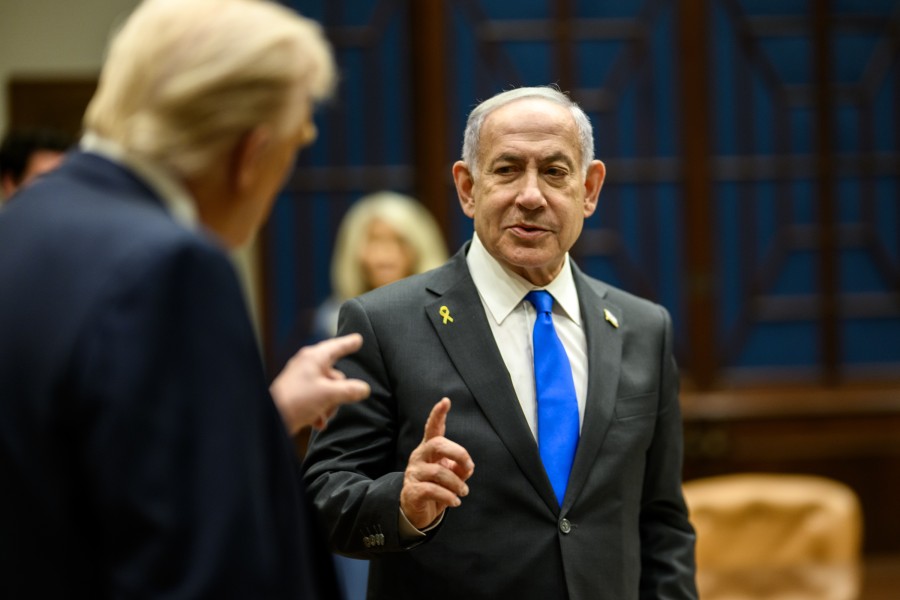
Israeli Prime Minister Benjamin Netanyahu has urged a shift in Israel’s defense strategy, suggesting that the nation reduce its reliance on U.S. military support by boosting its own weapons production capabilities. Addressing reserve combat officers in the Gush Etzion settlement area, Netanyahu acknowledged the critical role American support has played but emphasized the importance of Israel developing its own defense manufacturing infrastructure to ensure long-term security.
Netanyahu highlighted the ongoing confrontations with Iran and its affiliated groups as a significant security concern for Israel. He stressed that the nation’s future safety hinges on bolstering its military strength, enhancing technological advancements, and nurturing leadership skills within its defense forces. His statements come at a time when Israel and the United States are negotiating a new 10-year security cooperation agreement. This framework aims to gradually evolve the bilateral relationship from one heavily reliant on U.S. military aid to a more balanced partnership.
There is a growing sentiment within Israel about potential marginalization in recent diplomatic initiatives between the United States and Iran. Israel was notably absent from the discussions leading to a memorandum of understanding between Washington and Tehran, which aims to de-escalate tensions and prevent future conflicts. This agreement touches on various regional issues, including Lebanon, where Israeli military operations against Hezbollah are ongoing. Iran has called for Israel’s withdrawal from Lebanese territories, yet Israel insists on maintaining its presence until security threats are adequately addressed.
The situation underscores the friction regarding U.S. influence over Israeli military policies. Recently, former U.S. President Donald Trump noted that Washington holds considerable sway over Israeli actions due to the strong alliance between the two countries. Some Israeli officials have criticized the U.S.-Iran agreement, arguing that it falls short of key goals, such as dismantling Iran’s nuclear and missile programs. The U.S. has reiterated its commitment to preventing Iran from acquiring nuclear weapons, leaving open the possibility of renewed action if negotiations do not succeed.
U.S. Vice President JD Vance defended the agreement, highlighting the extensive military aid the United States has provided to Israel over the years. He emphasized the need to preserve the strategic partnership between the two nations, suggesting that the current security framework strengthens their collaborative defense efforts in the face of regional threats.